America's Test Kitchen
- 4.8
- Rating
- 100.00K
- Installs
- Free
- Price

 Analysis by App-foxy
I opened America’s Test Kitchen expecting a recipe app that would help me get dinner on the table without turning meal planning into another project. That is mostly what I found: a focused Food & Drink app from America’s Test Kitchen that puts practical recipes and collections ahead of social feeds, flashy cooking videos, or endless browsing. Its promise is especially useful on a busy weeknight, when I want a dependable idea rather than ten minutes of scrolling.
The app is free to install and suitable for Everyone, although some of its content is connected to in-app purchases ranging from $9.99 to $89.99 per item. That makes the first visit easy, but it also means I would not treat every recipe or collection as automatically included. My overall impression is positive: this is a strong choice for people who value tested cooking guidance and organized inspiration, while casual cooks who only want a completely free recipe index may find the paid boundary frustrating.
How it works in a real household
The most convincing way to use this app is in a shared kitchen. Imagine coming home late, opening the recipe collections, and looking for something that fits a weeknight rather than browsing a general search engine. I would use the app on my phone while someone else checks the pantry or starts heating the oven. The useful part is not simply finding a dish; it is narrowing the decision to recipes that feel realistic for the evening.
You May Also Like

 Blood Strike: 2.5 Anniversary
Blood Strike’s Loadouts Turn Every Drop Into a Tactical Gamble
A close look at Blood Strike’s custom loadouts: how fast access to signature weapons reshapes its battle royale rhythm, rewards preparation, and narrows the gap between fights.

 Pandora - Music & Podcasts
Pandora’s Music Is Easy to Start, but Harder to Recover
Pandora’s strength is its low-effort path from a seed to a station. Its weak spot is how much confidence it asks you to place in connection, setup, and quiet recovery.

 8 Ball Pool
 Is Built on Rivalries, Rematches, and Routine
A close look at the rivalries, rematches, shared routines, and unanswered safety questions that turn a quick pool match into a persistent mobile community.

 Samsung Music
’s Quiet Strength Is Playing What You Already Own
Its reach comes less from spectacle than from dependable access to a personal library. That simplicity is both the app’s strongest retention engine and its ceiling.

 AccuWeather: Weather Radar
AccuWeather Review: A Quick, Clear Forecast for Everyday Decisions
For everyday plans, the best forecast is the one you can understand quickly. AccuWeather makes rain timing, radar, and local conditions easy to act on, with a few trade-offs.

 Hill Climb Racing
Why Hill Climb Racing Still Turns Crashes Into One More Run
A tiny car, a bumpy hill and one more upgrade: Hill Climb Racing keeps resurfacing because its simple chaos makes every near-miss feel personal.
More From Our News Desk
View All News


That shared-device scenario also reveals an important strength. A recipe app is easier to use when the person cooking can hand the phone to another household member without needing to explain a complicated interface. The quick, easy, and healthy focus gives the search a practical direction. I can ask a partner or housemate to choose between a couple of suitable ideas instead of sending them through an enormous catalogue.
I would still keep the device somewhere visible and stable while cooking. A phone balanced beside a cutting board is rarely ideal, particularly when the recipe requires frequent glances. The app helps with choosing and following a meal, but it does not replace sensible kitchen organization. I found it most useful when I decided on the recipe first, gathered the ingredients, and only then began cooking.
For a household with different tastes, collections are more useful than repeatedly searching for individual recipes. One person can look for lighter meals, another can focus on familiar comfort food, and the household can agree before anyone starts chopping. That small change cuts down on the familiar “what should we eat?” conversation, which is often the hardest part of cooking at home.
What I would do before sharing the phone
Before giving the device to another person, I would check whether the selected recipe is available without an additional purchase. The app is free, but its in-app purchase range means access may vary by recipe or collection. I would rather settle that question before shopping than discover a locked item after buying ingredients. This is a simple habit, but it prevents the app from becoming a source of household annoyance.
I would also agree on who is responsible for the final choice. In a shared kitchen, recipe browsing can become a loop where everyone suggests ideas and nobody commits. My preferred workflow is to let one person choose from a suitable collection, then let the cook confirm that the ingredients and time are reasonable. This makes the app a planning tool instead of another place for indecision.
Account boundaries matter as well. I would not assume that installing the app on a shared phone means every person has the same access to purchased material or personal preferences. If several people use one device, I would keep expectations clear about which account is active and who is making any purchase. The app can support shared cooking, but household members still need to coordinate access themselves.
This is particularly relevant when a parent, teenager, or housemate is choosing dinner. The Everyone content rating makes the app approachable for a broad household audience, but that rating does not tell me whether a particular recipe suits a young cook’s skill level. I would judge that from the ingredients, equipment, and preparation steps rather than handing over responsibility automatically.
Planning meals without turning it into homework
My favorite use is a short planning session at the start of the week. I would browse the collections, select a few meals with different flavors, and then check which ingredients overlap. That last step is where a recipe app can save more effort than a single recipe ever could. Choosing dishes that reuse vegetables, herbs, grains, or sauces can make shopping simpler and reduce forgotten leftovers.
I would not plan every meal in detail, though. The app is better as a source of dependable options than as a strict household schedule. Plans change when someone works late, an ingredient is unavailable, or nobody wants the meal chosen on Sunday. Keeping a couple of flexible recipes in reserve is more realistic than treating the collection as a fixed calendar.
There is also a useful distinction between browsing for inspiration and cooking from instructions. When I browse, I want short descriptions and a clear sense of the meal’s purpose. Once I commit, I want to stop exploring and concentrate on preparation. I recommend deciding on the recipe before entering the kitchen, because switching between alternatives while handling food creates unnecessary clutter and increases the chance of missing a step.
For households trying to eat better, the healthy angle can make the first filter easier. It does not mean every meal will suit every dietary need, and I would still inspect ingredients carefully for allergies, dislikes, or substitutions. The app can point me toward a sensible direction, but it cannot make the final decision for a household with strict requirements.
Where the developer’s approach stands out
America’s Test Kitchen gives the app a different feel from a general-purpose recipe search. Instead of relying on a huge mix of user submissions, the experience is shaped around the developer’s cooking identity and recipe collections. I found that more comfortable when I wanted a curated starting point. A broad search engine may offer more variety, but it also makes me compare sources, writing styles, and levels of detail.
That curation is valuable for a beginner who does not yet know how to judge a recipe. A random result can look attractive while hiding awkward timing, unusual equipment, or an ingredient that is difficult to find locally. A focused collection reduces that initial uncertainty. I still read the whole recipe before starting, but I spend less time wondering whether the dish is worth attempting.
The trade-off is breadth. Someone who wants highly specialized regional cooking, very niche dietary recipes, or a constant stream of community variations may prefer a broad recipe platform. I would also choose a simple browser search when I need one very specific substitution immediately. This app is strongest when I want a guided selection, not when I already know exactly what obscure dish or technique I need.
The current version is 6.19.0-rc.2, and the minimum operating system is Android 7.0. That gives the app a fairly accessible technical starting point for Android users with older devices. I would still keep the app updated where possible, particularly if the phone is shared and several people rely on it for cooking. A stale app can be inconvenient at the exact moment the household needs a recipe.
Using it with children, teenagers, and guests
The Everyone age context makes it reasonable to consider the app for a family kitchen, but I would separate viewing a recipe from performing every task. A child might choose a meal, read ingredient names, or help organize the shopping list, while an adult handles knives, heat, and food-safety decisions. The app can make cooking feel collaborative without deciding what each person is ready to do.
For a teenager who already cooks, I would use the app as a way to build independence gradually. They could select a weeknight recipe, explain why it fits the household, and identify what needs to be bought. I would then review the plan together rather than taking over. This approach gives the app a practical role in teaching planning, not just following instructions.
I would be more cautious with a guest using a shared account or device. A visitor may only need to see the chosen recipe, while a household member may have different expectations about saved material or purchases. Showing the recipe directly is clearer than allowing someone to explore unsupervised and accidentally cross a purchase boundary. That is not a flaw unique to this app; it is simply good practice for any shared device with paid content.
Trust also matters when recipes involve allergies or medical diets. I would never rely on a general healthy label as a substitute for checking the full ingredient list and preparing the meal safely. In my household, the person with the dietary restriction would have the final say. The app helps generate ideas, but responsibility remains with the people eating the food.
Small habits that make the app more useful
My first tip is to browse collections when I am calm, not when everyone is already hungry. That is when I can notice whether a recipe fits the week and whether several choices share ingredients. A quick evening search is still useful, but a little advance browsing turns the app into a planning resource rather than an emergency decision machine.
My second tip is to treat the recipe title as the beginning of the decision, not the end. I would check the preparation sequence, required equipment, and any ingredient that could be difficult to replace. This is especially important for a shared household, because the person who chooses a meal may not be the person who cooks it. A two-minute handoff can prevent a great deal of confusion.
My third tip is to use the app as a conversation starter. I might ask each household member to choose one collection or meal style, then rotate who makes the final selection. That gives everyone a voice without requiring every person to browse the entire catalogue. It also helps prevent one confident cook from becoming the only person who knows how dinner gets planned.
A fourth useful habit is to keep a backup meal outside the app. Even a carefully chosen recipe can fail as a plan if an ingredient is missing or the day runs long. I would keep something simple in the pantry and use the app for the preferred option. This makes the cooking routine more resilient and prevents disappointment from turning into takeout by default.
What may frustrate regular users
The clearest friction is the relationship between the free installation and paid content. A free download is inviting, but the purchase range means I need to pay attention while browsing. For someone who expects one unrestricted library after installing, that can feel less straightforward than a basic recipe website. I would recommend exploring the available material first and deciding whether the included experience is enough before spending money.
Another limitation is that curated collections can feel less flexible than a general search. If I have half a zucchini, a particular leftover grain, and no desire to shop, I may get faster results from a search engine or a pantry-focused tool. This app is designed around finding useful recipes and collections, not necessarily solving every improvised ingredient puzzle.
Shared use can introduce its own complications. The app does not remove the need to decide who is browsing, who is cooking, and who is paying for optional content. On a family device, I would establish those boundaries early. Without that conversation, even a well-organized recipe app can create duplicated effort or accidental misunderstandings.
I also would not choose it solely because the average rating is high. The app has a 4.8 average from around 3.9 thousand ratings, which is encouraging, and it has passed 100 thousand installs. Those figures suggest that many people find it useful, but they cannot tell me whether its cooking style matches my household. I care more about whether the collections fit our meals and whether the purchase model feels acceptable.
Who should install it
I would recommend America’s Test Kitchen to a busy home cook who wants fewer, more purposeful choices. It suits someone who enjoys reliable guidance, prefers curated recipe collections, and needs ideas for weeknight meals without building a plan from scattered websites. It is also a good fit for a couple, family, or shared household that wants to divide meal planning and cooking more evenly.
Beginners may appreciate the reduced uncertainty, while experienced cooks can use the collections to break out of a repetitive dinner routine. The app is particularly useful when the household wants to cook at home more often but does not want meal planning to become a hobby in itself. I would install it on a shared kitchen device if everyone agreed about account use and paid content.
I would skip it if my priority were an entirely free catalogue, highly specialized dietary filtering, or a community-driven stream of endless variations. I would also look elsewhere if I mainly need a tool that builds a shopping list automatically from a complicated weekly plan. A general recipe site may be more convenient for one-off searches, and a dedicated meal-planning service may be better for strict scheduling.
My household verdict
After using it as a practical cooking companion, I see America’s Test Kitchen as a thoughtful Food & Drink app rather than a complete household management system. Its best quality is the way it narrows dinner decisions into approachable, organized choices. That matters when two people share a kitchen, when a teenager is learning to cook, or when everyone is tired and needs a realistic meal idea.
The free entry point and Everyone rating make it easy to consider, while the developer’s curated approach gives it more direction than a random recipe search. The paid content requires attention, and the app is not the right answer for every dietary, pantry, or scheduling problem. Those limitations are manageable if I understand what I am installing.
My recommendation is to try it with a specific household routine: browse a collection together, confirm access before shopping, choose one person to cook, and keep a backup meal available. If that workflow feels natural, the app can become a genuinely useful part of the week. For shared kitchens, its real value is not just finding recipes; it is making the decision to cook together easier.
FAQs for America's Test Kitchen
01What is America’s Test Kitchen?
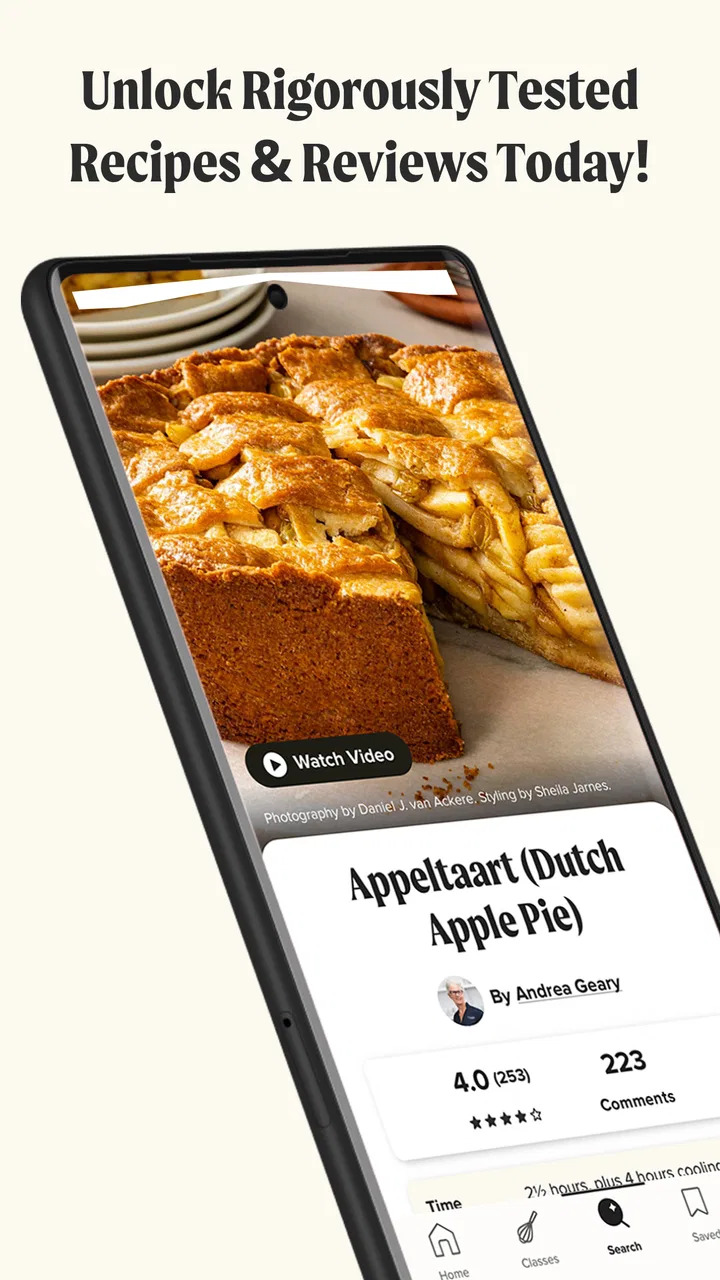
America’s Test Kitchen is a cooking and recipe platform built around the trusted content from the America’s Test Kitchen media brand. It offers tested recipes, cooking techniques, equipment recommendations, instructional videos, and food-related articles. The app is designed for both beginners and experienced home cooks who want detailed guidance rather than quick, untested recipe ideas. Its content generally emphasizes repeatable results and practical explanations.
02Does America’s Test Kitchen require a subscription?
Many of the app’s recipes, videos, articles, and advanced features may require a paid membership or subscription, while some content can usually be viewed without subscribing. The exact access level may vary depending on the platform, region, and current offer. Before downloading or starting a trial, check the in-app subscription details, renewal terms, and whether the features you want are included in the selected plan.
03What kind of recipes and cooking content are available?
The platform covers a broad range of home cooking, including weeknight meals, baking, desserts, vegetarian dishes, family recipes, sauces, side dishes, and cooking fundamentals. Recipes typically include ingredient lists, step-by-step instructions, preparation times, serving information, and explanations of why particular methods work. This makes the app useful when you want more than a basic recipe and prefer structured, test-kitchen-style instruction.
04Can I save recipes and use America’s Test Kitchen while cooking?
America’s Test Kitchen is designed to help users organize and follow recipes during meal preparation. Depending on the current app version and account type, you may be able to save favorites, create collections, search by ingredients or categories, and return to recently viewed recipes. A clear step-by-step layout can be convenient in the kitchen, although you should confirm which organizational tools are available without a subscription.
05Is America’s Test Kitchen suitable for beginner cooks?
Yes, the app can be a strong choice for beginners because its recipes usually explain techniques, equipment, ingredient choices, and common mistakes in considerable detail. Instead of assuming extensive cooking knowledge, much of the content guides users through each stage of preparation. However, some recipes may be more involved than quick social-media meals, so beginners should start with simpler dishes and review the required ingredients and tools first.
Pros
- Trusted recipes developed and tested by professional cooks.
- Clear step-by-step instructions suit beginners and experienced home cooks.
- Helpful cooking videos demonstrate techniques visually.
- Recipes often include practical tips
- substitutions
- and equipment advice.
- Useful for planning reliable meals across many cuisines and skill levels.
Cons
- Many premium recipes and features require a paid subscription.
- The large recipe library can feel overwhelming when choosing what to cook.
- Some recipes require specialty ingredients or kitchen equipment.
- Video and image-heavy content may use significant mobile data.
- Not every recipe is equally convenient for quick weeknight cooking.

America's Test Kitchen
Gallery